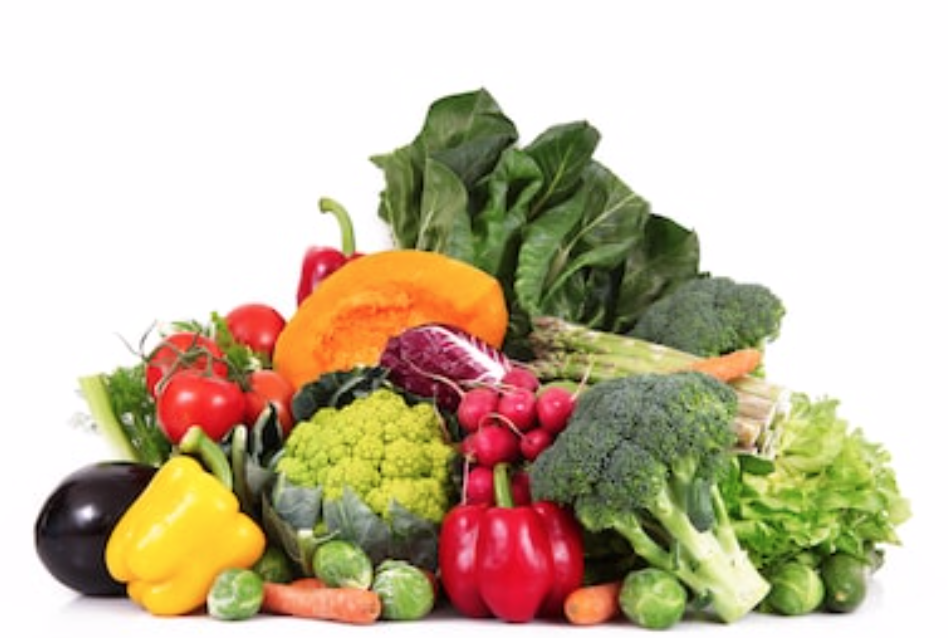
It’s a new year! Every year over 9 out of 10 Americans make resolutions in hopes of improving their health and wellness for the upcoming year.1 But how many of these resolutions are actually successful? Research shows that nearly half fail by February and less than one in five are successful two years later.2
So what kinds of resolutions are actually successful? Not surprisingly, simple resolutions that focus on behaviors that are easy to change are the most successful.3 Breaking down the larger goal of eating more fruits and veggies into simpler, more manageable goals is key.
Although it’s already February, it’s always the right time to take steps towards improving the health and wellness of your family. Here is one simple thing that you and your family can do to eat more fruits and veggies daily:

What does the research say?
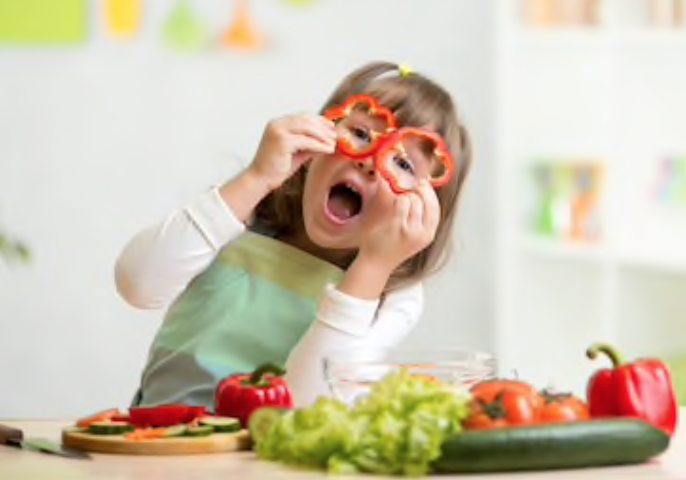
Eating fruits and veggies first as a strategy to increase fruit and vegetable consumption was tested in a school cafeteria. Elementary school students were given a small serving of vegetables while they waited in line for lunch.4
The result?
Serving vegetables before the lunch meal greatly increased the number of students eating vegetables. In fact, kids consumed 6 times more vegetable servings on days they were offered veggies before lunch!4
Let’s take these findings home!

- Enlist helping hands. Get you kids to help out with meal prep. While you’re doing this, serve fruits and veggies as a pre-meal snack.
- Make it fancy. Serve fruits and veggies ahead of the meal and give this course a fancy name that kids can get excited about.
- Wait for it. Hold off on serving the rest of the meal until at least some fruits and veggies are eaten, but don’t make this a battle. If your child isn’t up for this initially, that’s ok- this may take a couple of tries.
- Eat before you sit. Before your kids even make it to the table, serve them some fruits and veggies.

You can do this!
Consistency is key for forming habits. Stick with it, regardless of setbacks. Making fruit and vegetable consumption as easy as possible will make for a successful New Year’s resolution!
References
- APA report: lack of willpower may be obstacle to improving personal health and finances. American Psychological Association Services, Inc. https://www.apaservices.org/practice/update/2012/02-23/willpower. February 23, 2012. Accessed February 15, 2020.
- Norcross JC, Vangarelli DJ. The resolution solution: longitudinal examination of New Year’s change attempts. J Subst Abuse Treat. 1988; 1(2): 127-134. doi: 10.1016/S0899-3289(88)80016-6.
- Riis J. The behvavioral science of increasing fruit and vegetable consumption. Have a Plant. https://fruitsandveggies.org/stories/the_behavioral_science_of_increasing_fruit_and_vegetable_consumption/. Published 2020. Accessed February 15, 2020.
- Elsbernd SL, Reicks MM, Mann TL, Redden JP, Mykerezi E, Vickers ZM. Serving vegetables first: a strategy to increase vegetable consumption in elementary school cafeterias. Appetite. 96(1); 2016: 111-115. doi: 10.1016/j.appet.2015.09.001.

 Food Cents